BOARD & CEO PERSPECTIVES

STRATEGIC INSIGHTS

Perspectives on Smart Cities, Provinces, and Financial Ecosystems

BoA’s Insights

Alexander

Board of Advisors - Financial Wealth Indonesia

Published in FWI Strategic Insights Journal. Copy verbatim from the official ecosystem framework.

The Suitable Smart City for Indonesia
DOCUMENT ILLUSTRATION REQUIRED /img/insights/suitable-smart-city.png
ALT TEXT: The Suitable Smart City for Indonesia Illustration

Illustration: The Suitable Smart City for Indonesia

At Financial Wealth Indonesia, we believe that the most suitable smart city model for Indonesia is not defined solely by advanced technology, but by its ability to address the nation’s unique urban realities, economic diversity, and social inclusivity.

Indonesia is an archipelago with highly diverse city characteristics — from metropolitan centers such as Jakarta and Surabaya to emerging regional capitals and growth corridors across the provinces. Therefore, the ideal smart city for Indonesia must be adaptive, scalable, and locally relevant, rather than a one-size-fits-all digital model.

From our perspective, a suitable smart city in Indonesia should be built upon six strategic pillars:

1. Inclusive Smart Financial Ecosystem

A successful city must enable seamless digital financial connectivity across citizens, MSMEs, enterprises, and government institutions. This includes integrated digital payments, smart taxation systems, financial inclusion platforms, and secure transaction infrastructure that supports both formal and informal economic sectors. For Indonesia, where MSMEs remain the backbone of economic growth, financial connectivity is essential to sustainable urban development.

2. Citizen-Centric Digital Governance

Smart city success depends on how easily citizens can access public services. From digital licensing and identity verification to healthcare, education, and public assistance, services must be designed around speed, accessibility, and transparency. Indonesia’s evolving smart city frameworks already emphasize governance, mobility, living, and infrastructure as core domains.

3. Smart Mobility for Urban Efficiency

Urban congestion remains one of Indonesia’s largest city challenges. The suitable smart city must integrate traffic intelligence, public transport interoperability, digital ticketing, and smart route management to improve urban movement and productivity. This is especially critical for high-density cities and fast-growing satellite regions.

4. Sustainable Environment & Resilience

For Indonesia, smart city development must also address flooding, waste management, climate resilience, and energy efficiency. The right model is one that combines data intelligence with environmental sustainability, creating cities that are both technologically advanced and ecologically responsible. This aligns with Indonesia’s current national smart city and new capital development direction.

5. Human-Centered Urban Intelligence

Technology alone does not create a smart city. The most suitable city is one where people, communities, and institutions are digitally empowered through education, literacy, security, and access. In Indonesia’s context, human readiness is as important as infrastructure readiness.

6. Interconnected Digital Infrastructure

At the heart of every successful smart city lies trusted digital backbone infrastructure. Financial Wealth Indonesia sees this as the core enabler that connects financial services, governance systems, mobility networks, and citizen platforms into one unified ecosystem.

For Indonesia, the most suitable smart city is one that is intelligent in technology, inclusive in access, and relevant to local realities. At Financial Wealth Indonesia, we are committed to becoming the digital backbone partner for Indonesia’s future-ready urban transformation.
Chairman’s Insights

Aswin Wirjadi

Chairman of Financial Wealth Group

Published in FWI Strategic Insights Journal. Copy verbatim from the official ecosystem framework.

The Future of Indonesia Begins with Smart Provinces

DOCUMENT ILLUSTRATION REQUIRED /img/insights/smart-provinces.png
ALT TEXT: The Future of Indonesia Begins with Smart Provinces Illustration

Illustration: The Future of Indonesia Begins with Smart Provinces

At Financial Wealth, we believe the next chapter of Indonesia’s growth will not be defined solely by the rise of individual smart cities, but by the emergence of Smart Provinces as fully connected economic ecosystems.

Indonesia is a nation of immense scale, diversity, and untapped regional potential. From industrial corridors and digital commerce hubs to agricultural regions and tourism destinations, every province carries its own economic identity and strategic value. The future lies in connecting these strengths through a unified framework of digital governance, intelligent infrastructure, and financial connectivity.

A Smart Province is more than a technological ambition. It is a strategic model for long-term prosperity. It represents a province where government systems operate with transparency and data intelligence, where businesses move within a seamless digital financial infrastructure, and where capital can flow efficiently into strategic projects that accelerate sustainable development.

For us, financial architecture is central to this transformation. Without trusted financial ecosystems, digital growth remains fragmented. Without capital connectivity, regional innovation cannot scale. This is where Financial Wealth sees its strategic role — building the bridge between regional vision, enterprise value, and institutional capital.

We envision provinces across Indonesia evolving into integrated ecosystems where public administration, investment platforms, SMEs, infrastructure projects, and digital communities are connected within one intelligent economic framework.

This is not only about modernization. This is about enabling provinces to become engines of national resilience, inclusive growth, and future-ready prosperity. As Indonesia moves forward, the Smart Province model will become a defining pillar of economic competitiveness in the digital era.

At Financial Wealth, we are committed to supporting this vision through strategic insight, financial ecosystem development, and trusted partnerships that help transform regional ambition into measurable value.

The future of Indonesia will be built not only in its cities, but across its provinces — where technology, governance, and finance converge to create a new standard of growth.
CEO’s Insights

Meity Anita

CEO of Financial Wealth Group

Published in FWI Strategic Insights Journal. Copy verbatim from the official ecosystem framework.

The Future of Indonesia’s Financial Ecosystem

DOCUMENT ILLUSTRATION REQUIRED /img/insights/future-financial-ecosystem.png
ALT TEXT: The Future of Indonesia’s Financial Ecosystem Illustration

Illustration: The Future of Indonesia’s Financial Ecosystem

At Financial Wealth Indonesia, we see Indonesia’s financial ecosystem as one of the most dynamic and transformative growth landscapes in Southeast Asia.

Indonesia is no longer evolving through traditional banking channels alone. Today, the nation is rapidly building a connected financial ecosystem where banks, fintechs, digital platforms, government systems, MSMEs, and consumers operate within one integrated digital framework.

The acceleration is clearly visible in payment infrastructure and digital adoption. Bank Indonesia reported 4.79 billion digital payment transactions in January 2026, with QRIS transactions growing more than 131% year-on-year, while BI-FAST processed 455 million transactions in the same month.

From the CEO’s perspective, the future of Indonesia’s financial ecosystem will be defined by three strategic forces:

1. Financial Connectivity as National Infrastructure

Financial services are no longer standalone products. They are becoming embedded infrastructure across commerce, mobility, public services, and daily consumer experiences. Payments, lending, treasury services, wealth solutions, and government disbursements must move seamlessly across institutions and digital platforms. This is where ecosystem connectivity becomes the new competitive advantage.

2. Financial Inclusion at National Scale

Indonesia’s strength lies in its vast population, vibrant MSME economy, and rapidly growing digital middle class. The most important opportunity is to connect the underserved, unbanked, and underbanked segments into the formal financial system through mobile-first experiences, QR payments, digital onboarding, and AI-driven credit assessment. From our perspective, inclusion is not only a social objective — it is a strategic economic growth engine.

3. Trust, Governance, and Digital Resilience

As the ecosystem expands, trust becomes the foundation. A sustainable financial ecosystem in Indonesia must be built on security, compliance, resilience, and regulatory alignment with OJK and Bank Indonesia frameworks. The latest regulatory developments around payments, BNPL, digital assets, and financial aggregators signal that Indonesia is moving toward a more mature and institutionally governed ecosystem. This creates long-term confidence for both investors and public institutions.

“We believe Indonesia’s future belongs to a connected financial ecosystem — one that is inclusive, intelligent, and trusted at national scale.” — CEO Perspective, Financial Wealth Indonesia
At Financial Wealth Indonesia, our role is to become the digital backbone of financial connectivity, enabling institutions, businesses, and communities to move forward within one integrated ecosystem. The future of finance in Indonesia is not isolated banking — it is ecosystem intelligence.
COO’s Insights

Richard Andrew

COO of Financial Wealth Indonesia

Published in FWI Strategic Insights Journal. Copy verbatim from the official ecosystem framework.

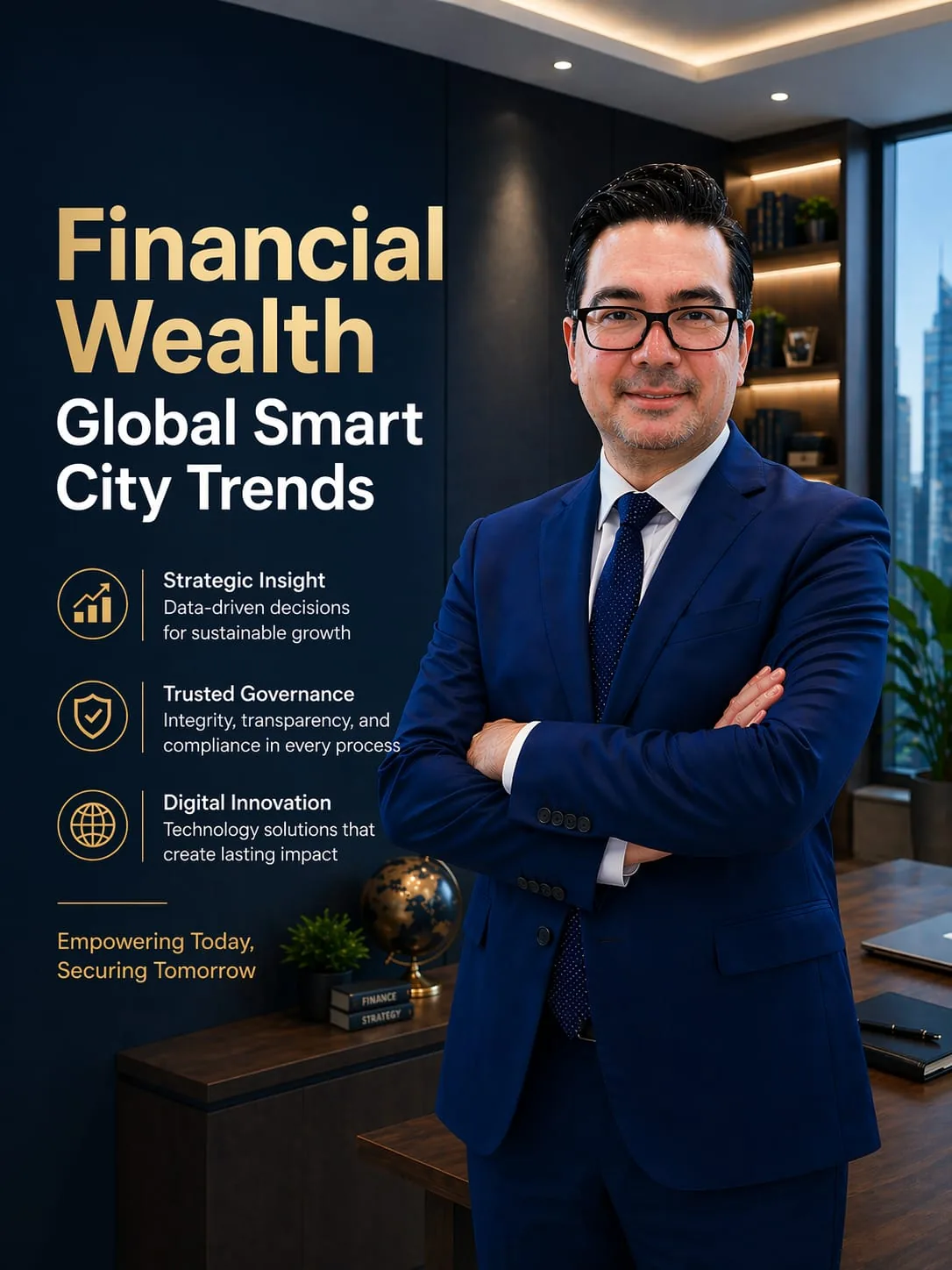
Global Smart City Trends: Lessons from the World’s Most Successful Cities

DOCUMENT ILLUSTRATION REQUIRED /img/insights/global-smart-city-trends.png
ALT TEXT: Global Smart City Trends: Lessons from the World’s Most Successful Cities Illustration

Illustration: Global Smart City Trends: Lessons from the World’s Most Successful Cities

As urban transformation accelerates worldwide, Smart Cities are evolving beyond technology-led initiatives into fully integrated ecosystems of governance, sustainability, mobility, and financial infrastructure. Global trends show that the most successful Smart Cities are no longer defined solely by digital tools, but by how effectively they integrate people, policy, capital, and technology into one connected urban framework. Today, leading cities across the world are investing in AI-powered governance systems, intelligent transportation networks, smart utilities, green infrastructure, and data-driven public services.

Several major trends are shaping the next generation of smart urban development:

1. AI-Driven Urban Intelligence

Cities are increasingly using artificial intelligence and predictive analytics to optimize traffic flows, energy usage, public safety, and emergency response systems. This shift allows urban leaders to make real-time decisions based on dynamic city-wide data, improving both operational efficiency and citizen experience.

2. Sustainable Infrastructure & Green Mobility

Sustainability has become central to global smart city development. From EV charging ecosystems and smart street lighting to carbon-monitoring systems and intelligent waste management, cities are aligning technology with environmental goals.

3. Citizen-Centric Digital Governance

The most advanced smart cities focus on citizen engagement through digital public service platforms, integrated apps, and transparent governance systems. This creates stronger public trust and improves service accessibility at scale.

Examples of Successful Smart Cities
Singapore — The Global Benchmark

Singapore is widely recognized as one of the world’s leading Smart Cities. Its Smart Nation initiative integrates digital identity systems, real-time traffic management, smart healthcare, and seamless e-government services. Singapore’s success lies in its ability to combine policy leadership with technology infrastructure and long-term investment planning.

Barcelona — Urban Innovation Through IoT

Barcelona is a global case study in IoT-enabled city management. The city uses sensor-based street lighting, intelligent waste collection, smart parking systems, and sustainable mobility networks. Barcelona is often cited as a model for how digital systems can improve operational efficiency and quality of life.

Seoul — Hyperconnected Public Services

Seoul has built one of the most advanced digital governance ecosystems in Asia. Its integrated transport systems, digital citizen services, and real-time urban monitoring platforms make it a strong example of smart governance at scale.

Abu Dhabi — Emerging Global Leader

Abu Dhabi has rapidly advanced as one of the world’s smartest cities, driven by digital public services, safety innovation, and strong public-private partnerships.

Financial Wealth Perspective

For Financial Wealth, these global trends offer strategic insight for Indonesia’s Smart Province vision. The future is no longer about isolated city modernization. It is about building connected provincial ecosystems inspired by global best practices, where capital infrastructure, governance intelligence, and sustainable growth converge.

CEO’s Insights

Meity Anita

CEO of Financial Wealth Group

Published in FWI Strategic Insights Journal. Copy verbatim from the official ecosystem framework.

Wealth Management in the Era of Smart Cities

DOCUMENT ILLUSTRATION REQUIRED /img/insights/wealth-management-smart-cities.png
ALT TEXT: Wealth Management in the Era of Smart Cities Illustration

Illustration: Wealth Management in the Era of Smart Cities

At Financial Wealth Indonesia, we believe that wealth management in a smart city goes beyond traditional investment advisory and private banking services. In the context of a smart city, wealth management becomes part of a connected urban financial ecosystem — where personal wealth, business capital, digital assets, public infrastructure, and city-wide economic intelligence are seamlessly integrated.

A smart city is fundamentally an ecosystem built on data, connectivity, and intelligent services. This environment creates new opportunities for individuals, families, entrepreneurs, institutions, and governments to preserve, grow, and strategically allocate wealth.

1. Intelligent Financial Advisory Through Data-Driven Ecosystems

Smart cities generate real-time economic and behavioral data across mobility, payments, utilities, commerce, and public services. This data enables a new generation of wealth management that is more predictive, personalized, and strategic. From investment profiling and liquidity planning to digital treasury and portfolio optimization, wealth strategies can be informed by urban economic trends and ecosystem intelligence.

2. Wealth Creation Through Urban Opportunity

Smart cities naturally foster innovation, entrepreneurship, and capital formation. As digital infrastructure improves, cities become more attractive to startups, investors, MSMEs, and strategic industries, creating new wealth-generation channels through real estate, fintech, digital commerce, infrastructure funds, and public-private partnerships. In this context, wealth management must help clients identify long-term urban growth opportunities aligned with smart city development.

3. Sustainable and Future-Oriented Asset Allocation

A smart city also introduces a stronger focus on sustainability-linked wealth strategies. This includes investments in green infrastructure, sustainable property development, digital infrastructure funds, ESG-aligned portfolios, and smart mobility ecosystems. Urban transformation projects are capital-intensive, but they also create resilient long-term returns when supported by trusted financial structures.

4. Integrated Lifestyle Wealth Services

In a smart city, wealth management is increasingly embedded into daily life. Digital payments, property management, tax services, insurance, estate planning, and investment access can all be delivered within one intelligent ecosystem. This transforms wealth management from a periodic advisory service into a continuous lifestyle financial experience.

“In a smart city, wealth is no longer managed in isolation — it is orchestrated within an intelligent ecosystem that connects people, capital, and urban growth.”
Financial Wealth Indonesia Perspective
At Financial Wealth Indonesia, we see wealth management as a strategic pillar of future cities — enabling clients to participate in, benefit from, and lead the economic transformation of tomorrow’s urban ecosystems.

‘The future of wealth is intelligent, connected, and city-driven ‘

Partner With Us
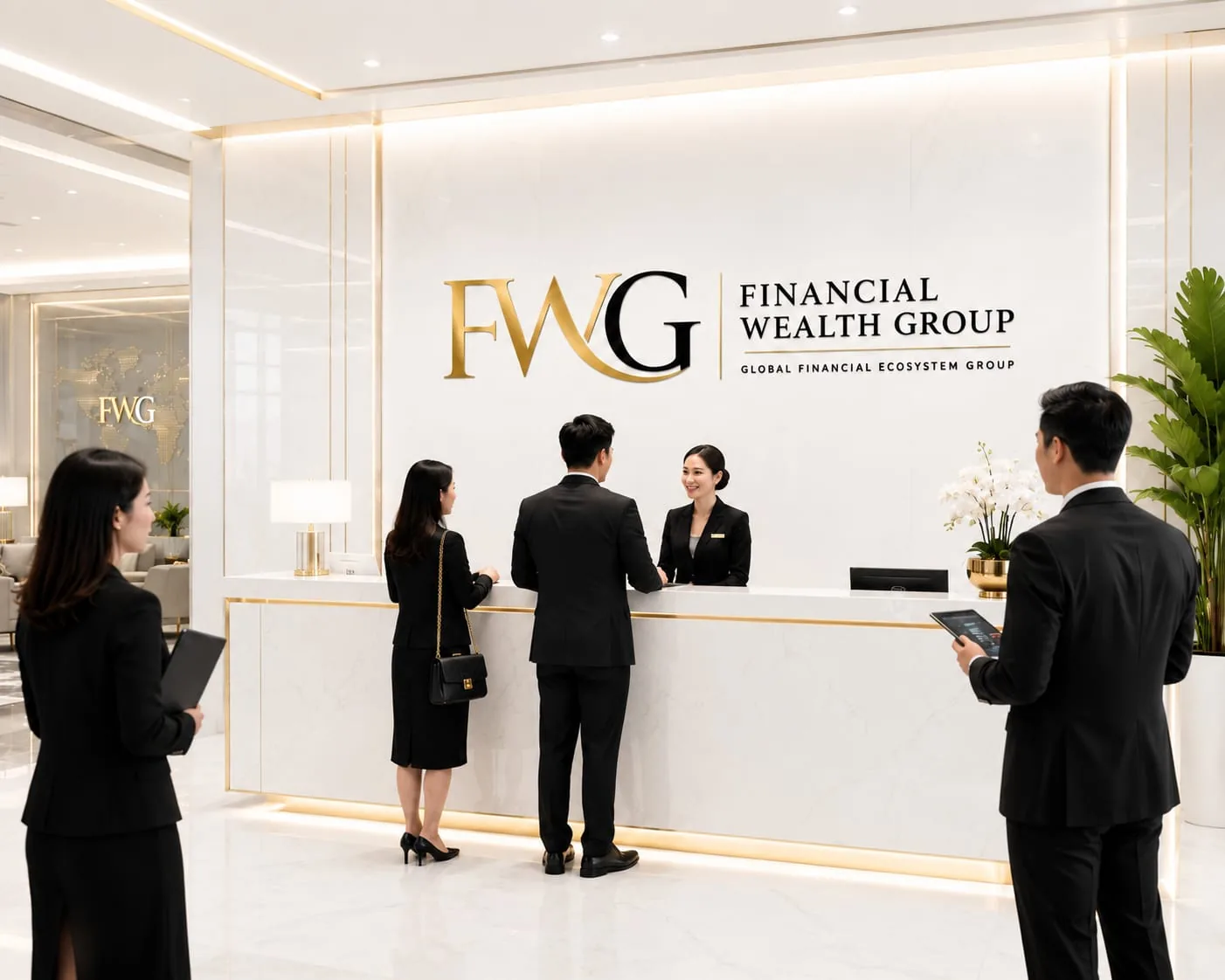
OFFICE IMAGE REQUIRED /img/connect/fwg-office.png
Headquarter:

Financial Wealth Group

One International Financial Center (IFC)Hong Kong 9th floorNo. 1 Harbour View Street, Central, Hong Kong 香港中環港景街 1 號 國際金融中心一期 9 樓
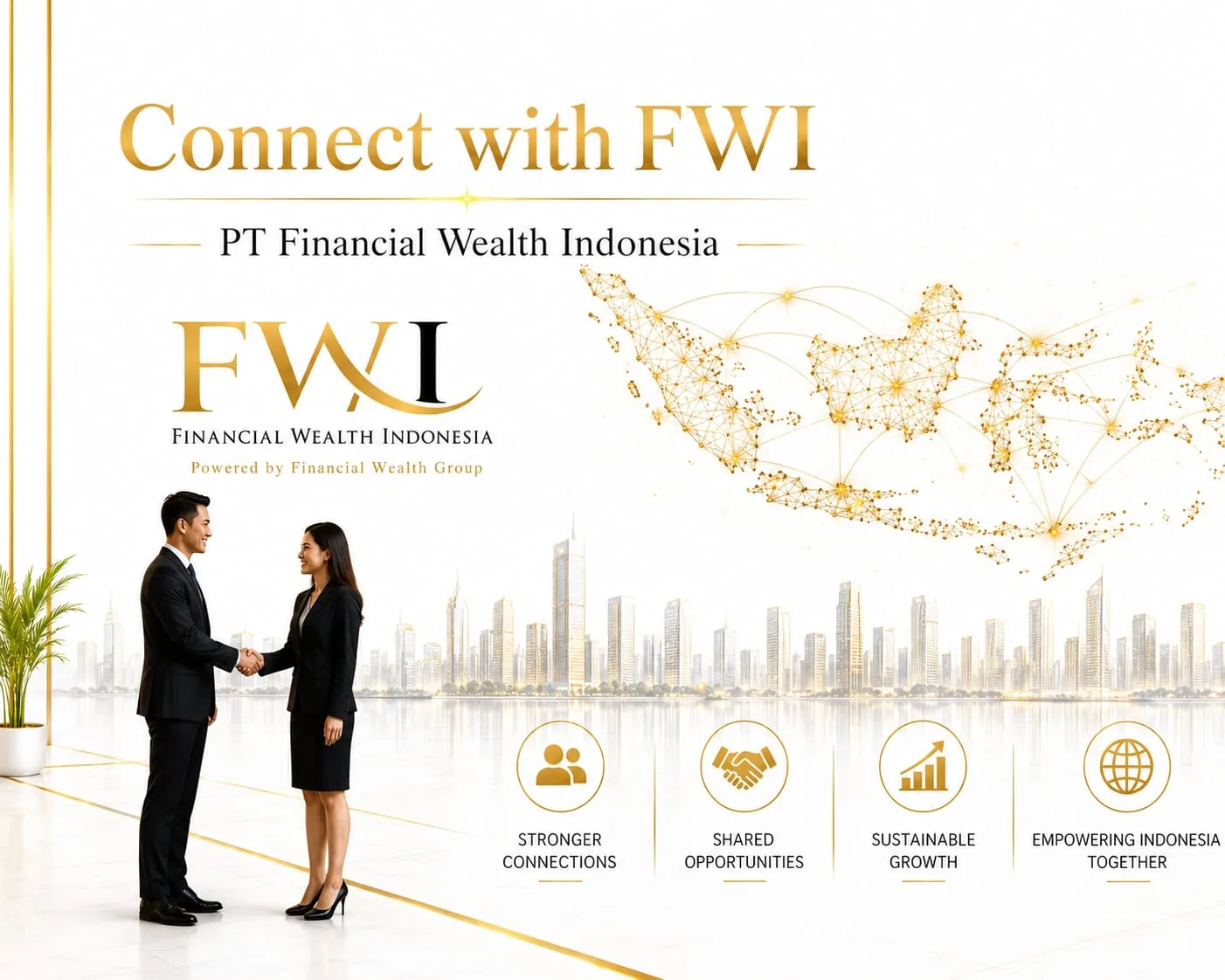
OFFICE IMAGE REQUIRED /img/connect/fwi-office.png
Financial Wealth - Jakarta Representative Office:

PT Financial Wealth Indonesia

The Plaza Office Tower 41st Floor,Jl. M.H. Thamrin No.Kav. 28-30Jakarta Pusat 10350