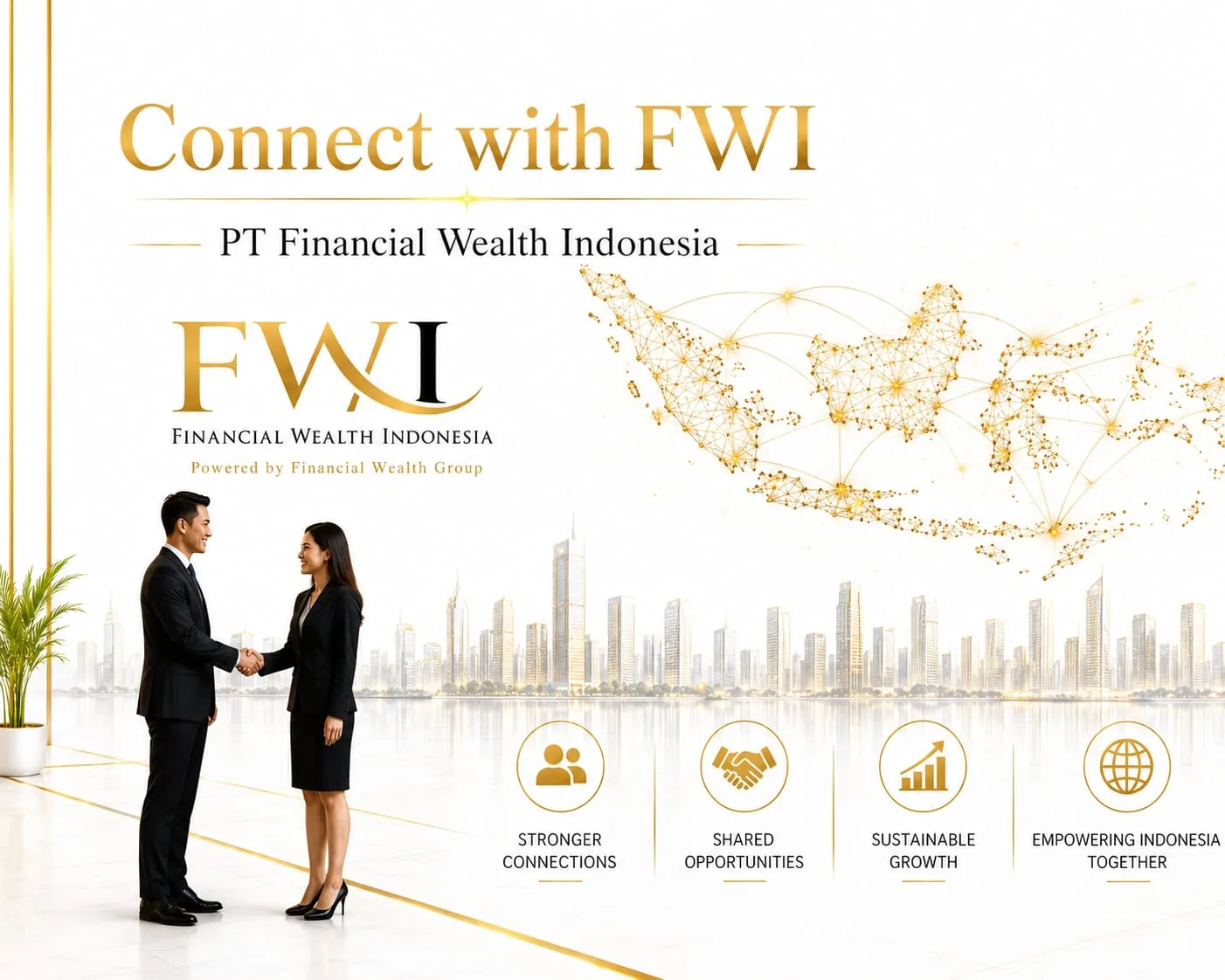
The Ten Ecosystem Pillars
Ecosystem Pillars
Together, our Ten Ecosystem Pillars form an interconnected ecosystem architecture designed to support the future evolution of finance, digital economies, institutions, regional ecosystems, human participation, and intelligent infrastructure.
FW Capital
Strategic finance and capital participation pillar connecting capital with long-term economic transformation opportunities.
FW Financial Infrastructure
Interconnected financial participation ecosystems integrating banks, fintech, payment systems, and future financial connectivity.
FW Digital
Digital economy participation, scalable financial technology ecosystems, and future-ready digital infrastructure.
FW Private Capital
Private wealth ecosystems, strategic investment participation, family office connectivity, and long-term capital relationships.
FW Smart Regions
Integrated regional ecosystem architecture connecting governance, finance, commerce, technology, MSMEs, and citizen participation.
FW Insights
Strategic observation ecosystem focused on financial intelligence, economic observation, institutional perspectives, and future economy narratives.
FW Global Institute (FWGI)
Future human capital participation, ecosystem education, financial literacy, leadership acceleration, and regional competency development.
FW Communities
Economic participation communities connecting private wealth networks, entrepreneurs, MSMEs, and emerging economic communities.
FW Intelligence
Artificial intelligence, cloud ecosystems, data infrastructure, analytics, and intelligent operational systems.
FW Institutional Strategic Advisory
Institutional transformation, ecosystem repositioning, regional economic strategy, and long-term ecosystem advisory frameworks.
Rather than operating as isolated business units, each pillar functions as part of a broader integrated ecosystem framework supporting sustainable long-term economic transformation.
Building Integrated Ecosystems for Sustainable Regional Growth
Architecture Chart
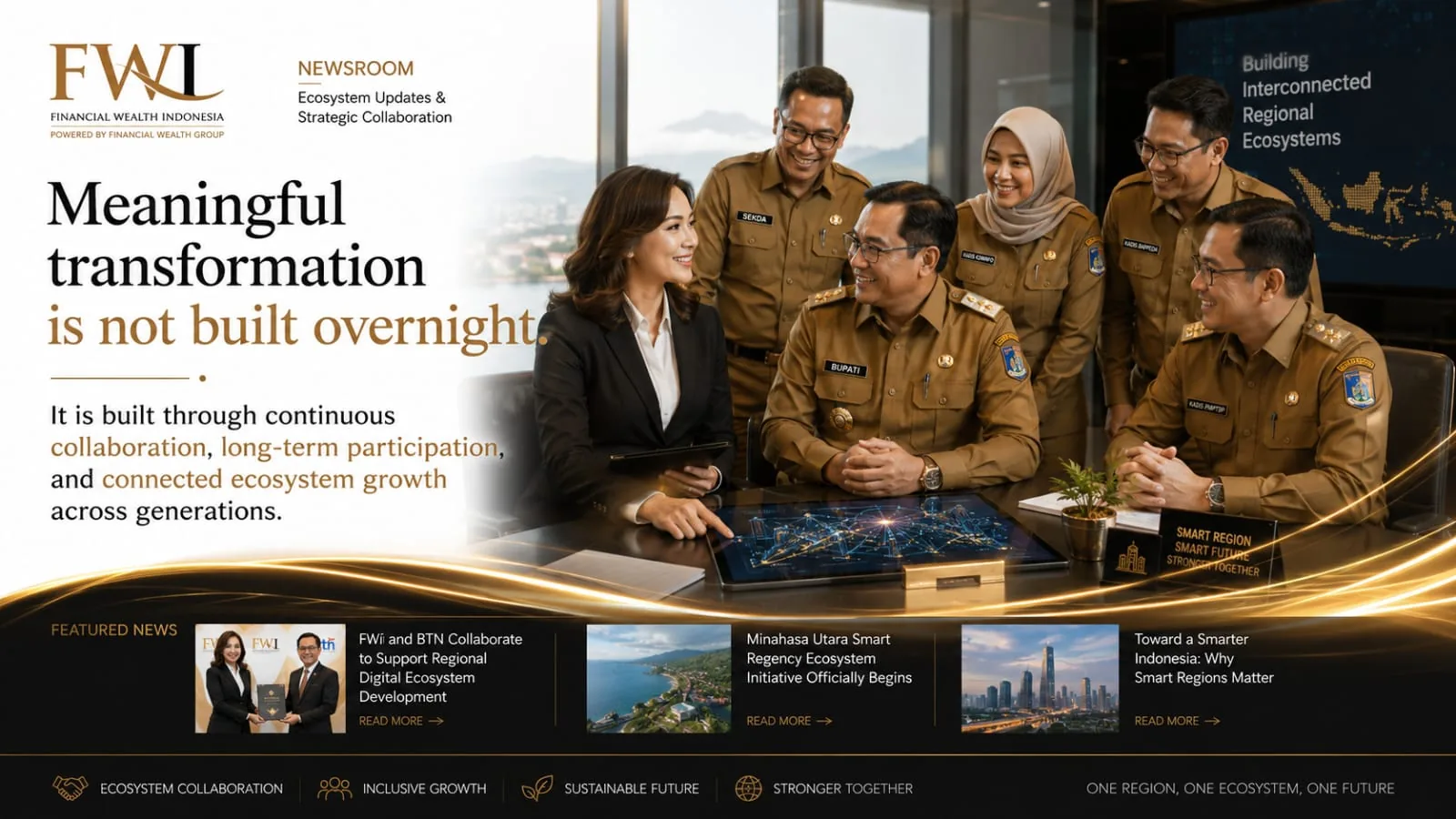
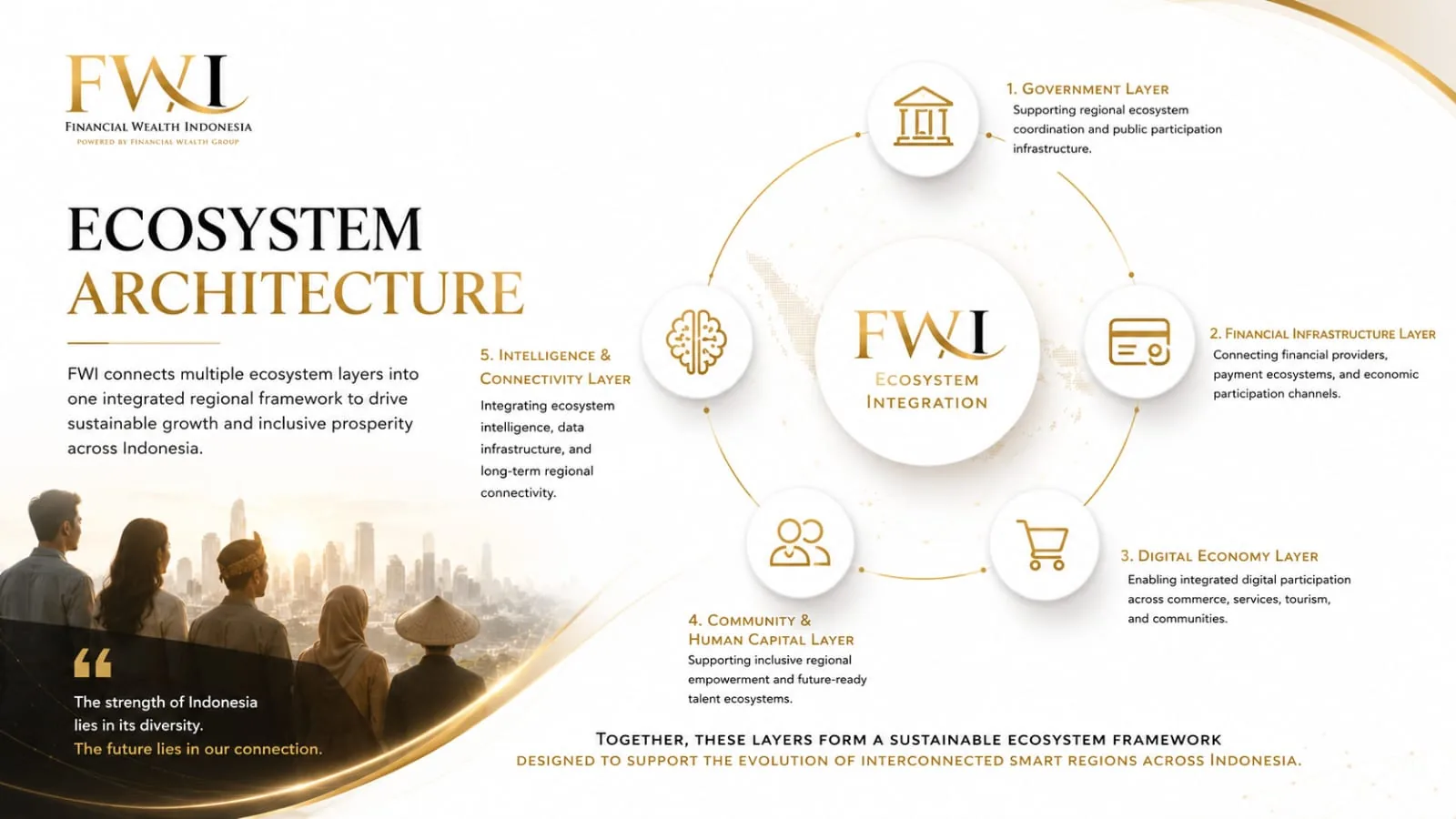
FWI connects multiple ecosystem layers into one integrated regional framework designed to support sustainable growth, inclusive participation, and long-term regional transformation across Indonesia.
Rather than operating through isolated systems, FWI enables collaboration between governments, financial providers, communities, digital infrastructure, and regional economies through an interconnected ecosystem approach.
We believe future regional development will depend on how intelligently ecosystems are connected.
THE FWI ECOSYSTEM FRAMEWORK
FWI integrates strategic ecosystem layers into one collaborative operational structure.
1. Government Layer
Supporting regional ecosystem coordination, public participation infrastructure, and integrated regional collaboration.
2. Financial Infrastructure Layer
Connecting financial providers, payment ecosystems, financial participation channels, and regional economic infrastructure.
3. Digital Economy Layer
Enabling integrated digital participation across commerce, services, tourism, MSMEs, and local economic ecosystems.
4. Community & Human Capital Layer
Supporting inclusive regional empowerment, future-ready communities, and sustainable human capital development.
5. Intelligence & Connectivity Layer
Integrating ecosystem intelligence, digital connectivity, data infrastructure, and long-term regional coordination.
AN INTERCONNECTED ECOSYSTEM APPROACH
Approach Scheme
Ecosystem Orchestration Aims
FWI believes sustainable regional transformation requires more than technology implementation. It requires integrated ecosystem participation between institutions, infrastructure, communities, and economic actors operating within one collaborative framework.
Through ecosystem orchestration, FWI aims to help regions:
- Strengthen participation
- Improve connectivity
- Accelerate digital inclusion
- Support economic circulation
- Enable more sustainable regional growth
From Isolated Systems to Connected Ecosystems
Traditional development models often operate through fragmented systems that limit long-term integration.
FWI is designed to support a more connected approach — where governments, financial infrastructure, communities, digital ecosystems, and regional economies are able to move together intelligently and sustainably.
Because the future of regional growth may not depend solely on infrastructure expansion. It may depend on how effectively ecosystems are connected.
The Future of Smart Regions
FWI believes the evolution of Smart Regions will not only be defined by digitalization.
It will be defined by the ability to build intelligent, interconnected, and sustainable regional ecosystems capable of supporting long-term prosperity across Indonesia.
Through integrated ecosystem architecture, FWI is committed to supporting that transformation — one region, one ecosystem, and one collaboration at a time.